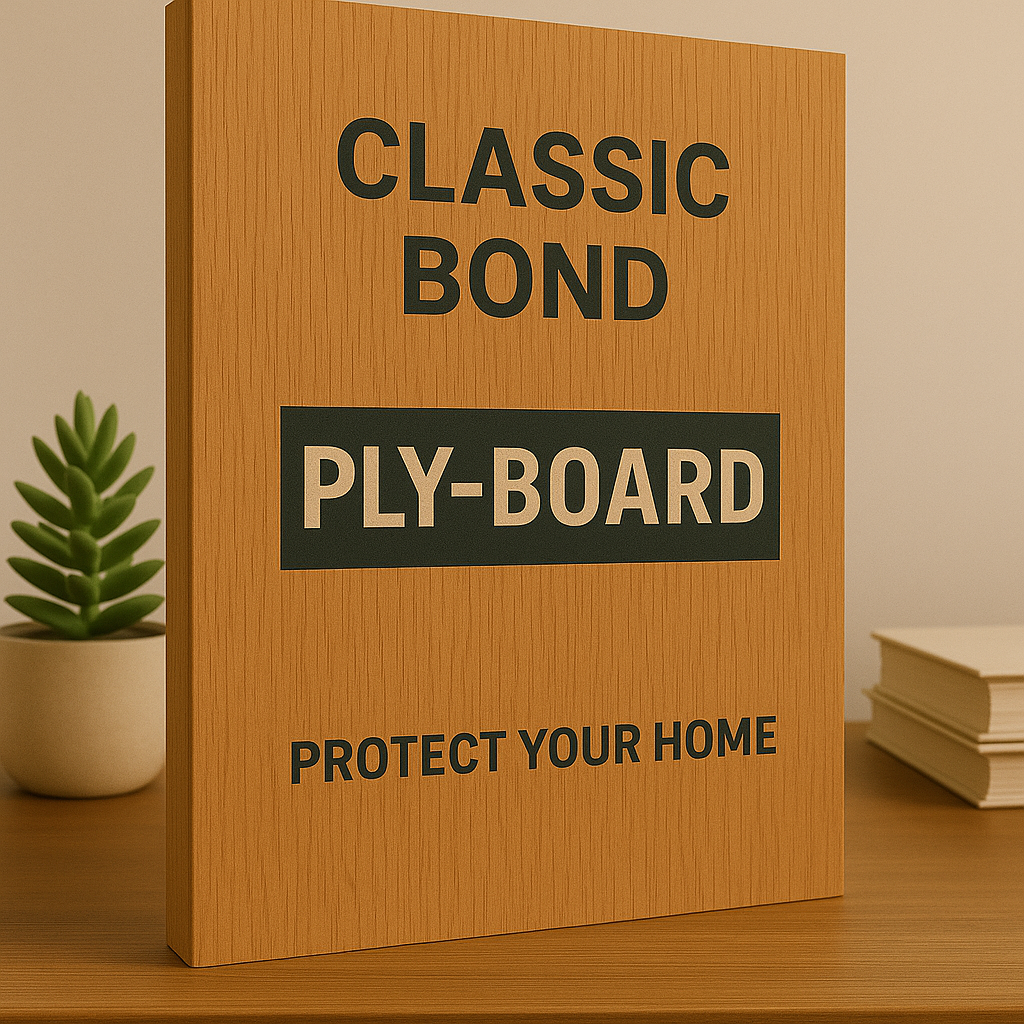
CLASSIC BOND PLY-BOARD provides a good balance of moisture resistance, durability, cost-effectiveness, and versatility, making it a popular choice for various interior applications
Cost-Effective: Compared to other PLY-BOARD options, CLASSIC BOND PLY-BOARD provides a good balance between performance and cost. It offers enhanced durability at a reasonable price.
Enhanced Moisture Resistance: The primary feature of CLASSIC BOND PLY-BOARD is its ability to withstand moisture. This resistance helps prevent warping, swelling, and delamination that can occur with regular plywood.
Durability: CLASSIC BOND PLY-BOARD is designed to be more durable and long-lasting, making it suitable for use in a variety of applications.
Surface Finish: The surface of CLASSIC BOND PLY-BOARD is typically smooth, making it a good candidate for painting or veneering. This smooth finish also helps in achieving a high-quality appearance.
Versatile Applications: CLASSIC BOND PLY-BOARD is versatile and can be used in a wide range of applications, from cabinetry to wall paneling. Its adaptability makes it a valuable material for many projects.
Easy to Work With: The smooth surface of CLASSIC BOND PLY-BOARD makes it easy to cut, shape, and finish. This ease of handling allows for a variety of design options and applications.
Pest and Fungal Resistance: CLASSIC BOND PLY-BOARD is often treated with preservatives to enhance its resistance to pests and fungal growth. This adds to its durability and longevity, especially in environments where pests or fungal growth are a concern.
The manufacturing process of CLASSIC BOND PLY-BOARD involves several key steps:
Veneer Preparation: Thin layers of wood veneer are prepared and sorted.
Adhesive Application: Moisture-resistant adhesive is applied to the veneers. This adhesive is typically phenolic or urea-formaldehyde, known for its water-resistant properties.
Layering: The veneers are arranged in a cross-grain pattern, with each layer oriented perpendicular to the one below it. This arrangement provides strength and stability.
Pressing: The layered veneers are pressed together under high pressure and temperature to bond the layers and form a solid sheet of plywood.
Finishing: The finished plywood is sanded to create a smooth surface, ready for painting, veneering, or other finishing processes.
CLASSIC BOND PLY-BOARD vs. Regular Plywood
When comparing CLASSIC BOND PLY-BOARD to regular plywood, several differences become apparent:
Moisture Resistance CLASSIC BOND PLY-BOARD: Designed to handle moisture better, reducing the risk of warping and swelling. Regular Plywood: Less resistant to moisture, which can lead to deterioration over time.
Durability CLASSIC BOND PLY-BOARD: Offers increased durability and is suitable for use in humid environments. Regular Plywood: Less durable in wet conditions and more prone to damage.
Cost CLASSIC BOND PLY-BOARD: Generally more expensive due to its enhanced properties. Regular Plywood: More affordable but lacks moisture resistance.
Care and Maintenance of CLASSIC BOND PLY-BOARD
To ensure the longevity of CLASSIC BOND PLY-BOARD, proper care and maintenance are essential:
Avoid Prolonged Water Exposure:
Even though CLASSIC BOND PLY-BOARD is moisture-resistant, it should not be exposed to water for extended periods. This helps prevent potential damage and maintains the plywood’s integrity.
Clean Spills Immediately:
Wipe off any spills or moisture promptly to prevent it from seeping into the plywood and causing damage.
Cost
ULTIMATE PLY-BOARD: Generally more expensive due to its enhanced properties. Regular Plywood: More affordable but lacks moisture resistance.
Seal Surfaces:
Applying a sealant can provide additional protection against moisture and enhance the durability of CLASSIC BOND PLY-BOARD.